

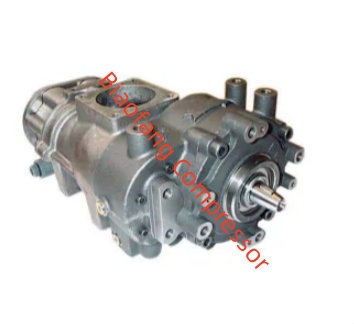
Choosing the GHH RAND CE55G/G1/G2 Screw Compressor Air End comes down to three things: matching the part number to the machine frame, confirming the element is oil-injected rather than oil-free, and buying a genuine core rather than a look-alike. Get those three right and you are back up and running with the same performance your plant has always relied on.
An air end is not a filter or a belt. It is the part that determines the machine’s output, efficiency, and reliability, so the stakes are higher and the margin for error is smaller. This guide explains how to select the GHH RAND CE55G/G1/G2 Screw Compressor Air End with confidence, from identification to installation.
What the GHH RAND CE55G/G1/G2 Screw Compressor Air End Is
An air end — also called an airend or compressor block — is the sealed element inside a rotary screw compressor where compression actually happens. Two interlocking screw rotors turn inside a precision-machined housing; as they rotate, the trapped volume between them shrinks and the air is squeezed to working pressure. In an oil-injected block like the CE55G/G1/G2, a small amount of lubricant is injected into the compression chamber to seal the rotors, cool the air, and lubricate the bearings.
GHH RAND is the German air-end specialist whose rotating cores sit inside many Ingersoll Rand machines. When a block carries the GHH RAND designation, it signals a core engineered to a tight, repeatable standard — exactly what you need when matching a replacement element to an existing compressor.
Quick take: the GHH RAND CE55G/G1/G2 Screw Compressor Air End is a genuine oil-injected rotary-screw compression core for Ingersoll Rand machines, supplied with a 1–2 year warranty.
Oil-Injected vs. Oil-Free: Which Design Is This?
Rotary screw air ends split into two families, and the difference changes everything about how you specify and maintain them. The CE55G/G1/G2 is an oil-injected (oil-flooded) design: lubricant is injected into the compression chamber to seal the clearances between the rotors, cool the compressed air, and lubricate the bearings in one circuit.
An oil-free block, by contrast, keeps lubricant entirely out of the compression chamber, using precision timing gears to keep the rotors from touching. Oil-injected cores deliver excellent efficiency and are the workhorse of general manufacturing; oil-free cores are chosen where the air stream must stay completely clean. Here is the comparison I walk buyers through:
| Factor | Oil-Injected | Oil-Free |
|---|---|---|
| Compression chamber | Lubricant injected to seal and cool | No lubricant in the air stream |
| Air purity | Trace oil removed by separator | Oil-free by design |
| Typical use | General manufacturing, tools, process air | Food, pharma, electronics, clean rooms |
Where the CE55G/G1/G2 Fits in the GHH RAND Range
The CE55G/G1/G2 is one member of a broad GHH RAND air-end family that Ingersoll Rand frames have carried across many model years. That family spans oil-free blocks like the CD series, and oil-injected cores across the CE, CF, OS, and IR ranges. The complete designation list our team works from includes:
- Oil-free CD range. CDC61/CDC41, CDA80, CDB54, CDA96, CDB68, CDA128, CDB90, CDA160, CD8D, CD14D, CD26D, CD42D, CD14S, CD26S, CD42S, CD72S and their Jet variants
- Oil-injected CE range. CE55C/O, CE55G/G1/G2, CE55RW, CE140, CE177, CE224 and their R/G variants
- Oil-injected CF range. CF75D8, CF90D4, CF90G5, CF128G, CF180, CF1000H and related L/D variants
- Oil-injected OS and IR ranges. OS70, OS110, OS110R, OSG110, IR178.5 (CE140), IR226 (CE177), IR285 (CE224), IR226/182, IR2x285 and the larger IR frames
Because the same element can appear under different labels, confirming the exact model and part number against your nameplate is the step that keeps the whole purchase on track. You can see how the GHH RAND CE55G/G1/G2 Screw Compressor Air End sits within the wider line on our oil-flooded rotary screw compressor category page.
How to Confirm Fitment Before You Order
The single most important step in buying the GHH RAND CE55G/G1/G2 Screw Compressor Air End is verifying fitment. Air ends are machined to tight clearances, and the mounting, gearing, and porting are specific to the machine family. A part that “looks close” can leave you with a mismatch that costs far more than the savings.
- Photograph the compressor nameplate, which shows the machine model and serial number
- Record the part number engraved on the existing air end itself
- Confirm the element is oil-injected rather than oil-free
- Note the running hours and any recent fault codes from the controller
Sending all four together removes a full round of back-and-forth and guarantees the correct element is quoted the first time.
Genuine vs. Look-Alike: What to Look For
When an air end fails, a lower-priced copy can look tempting. But an air end is judged by the clearance between its rotors, the quality of its bearings and seals, and the repeatability of its machining — none of which are visible from the outside. A look-alike can fail early, deliver less air for the same energy, or damage the downstream system.
A genuine GHH RAND core is manufactured to the original specification and backed by a stated warranty. For the part that determines the entire machine’s output, that difference pays for itself quickly.
Signs Your Current Air End Is Worn Out
No air end lasts forever, and catching the warning signs early is the difference between a planned swap and an emergency shutdown. Watch for a measurable drop in delivered pressure or flow at the same load, rising discharge temperature or frequent thermal trips, unusual noise or vibration, and increased energy draw for the same output. On an oil-injected block, oil carryover past the separator or a rising oil consumption rate are additional tell-tales that the rotors are wearing.
Why Source the CE55G/G1/G2 from Biaofang
When you are buying a replacement compression core, the supplier matters as much as the part number. Here is what we bring to the table at Biaofang:
Genuine GHH RAND core. We supply the GHH RAND CE55G/G1/G2 Screw Compressor Air End as a proper replacement element, not a look-alike copy.
Stated warranty. The block carries a 1–2 year warranty, so you are not buying blind.
Direct factory support. You deal with the source, which means faster answers on fitment, lead time, and technical questions.
Wide air-end range. The CE55G/G1/G2 is one of many Ingersoll Rand GHH RAND elements we carry — see the full lineup on our Ingersoll Rand GHH RAND category page.
Key Benefits of the GHH RAND CE55G/G1/G2 Screw Compressor Air End
Choosing the GHH RAND CE55G/G1/G2 Screw Compressor Air End pays off in three concrete ways. First, a genuine core restores the machine’s original output and efficiency, so you are not permanently derating your air system. Second, it protects the rest of the compressor — a correctly fitted, correctly built air end does not stress the motor, coolers, or controls the way a worn or mismatched element does. Third, it reduces the risk of a repeat failure that costs far more than the part itself.
- Restored output. A genuine air end returns the machine to its rated pressure and flow.
- Lower energy cost. A tight, healthy core compresses the same air with less energy draw.
- Protection for the whole system. Correct fitment avoids stress on the motor and downstream equipment.
How to Extend the Life of Your Air End
A compression block only performs as well as the system around it. The plants where oil-injected air ends reach and exceed their expected service life share the same habits:
- Replace inlet and separator filters on schedule, not on memory
- Keep coolers and ventilation clear so discharge temperatures stay low
- Watch oil condition and separator differential so carryover stays controlled
- Log pressure and temperature readings so trends are visible at a glance
Beyond the checklist, establish a performance baseline when the machine is healthy and compare every future reading against it. A slow, steady drift is almost always the first sign of wear. On the GHH RAND CE55G/G1/G2 Screw Compressor Air End, that discipline is what separates a core that runs quietly for years from one that fails without warning.
What to Check During Installation
Once the correct air end is in hand, the installation itself is where good parts get ruined by sloppy work. The checks that matter most are alignment, torque, and cleanliness. If the rotors and drive are not aligned, you transfer load into the bearings and shorten the life of a brand-new core. If fasteners are under- or over-torqued, you invite leaks or stress cracks. And if debris enters the housing during the swap, it can score the rotors before the machine has run its first hour.
- Verify alignment of the drive coupling before final tightening
- Torque all fasteners to the machine manufacturer’s specification
- Keep the inlet and ports covered until the final connection
- Refill the lubrication and cooling circuits correctly before start-up
After installation, run the machine up gradually and log the discharge pressure, temperature, and energy draw from the first hour. That reading becomes your new baseline. Done carefully, a proper installation of the GHH RAND CE55G/G1/G2 Screw Compressor Air End is the difference between a core that reaches its full service life and one that fails early for reasons that had nothing to do with the part itself.
Frequently Asked Questions
Is the CE55G/G1/G2 a direct fit for my Ingersoll Rand machine?
Fitment depends on your machine frame and original part number. The GHH RAND CE55G/G1/G2 Screw Compressor Air End replaces the corresponding designated core; send us your nameplate and existing part number and we will confirm the exact match before you order.
Is this an oil-injected or oil-free air end?
The CE55G/G1/G2 is an oil-injected (oil-flooded) design, meaning lubricant is injected into the compression chamber to seal, cool, and lubricate. It is the standard choice for general manufacturing; choose an oil-free block only when the air stream itself must stay contaminant-free.
Can I install the air end myself?
Airend replacement is precision mechanical work. If your team has rotary-screw rebuild experience, a supervised swap is possible; otherwise, have a qualified technician handle the alignment and torque procedure to protect your warranty.
How long will the CE55G/G1/G2 air end last?
Service life depends on duty cycle, ambient conditions, and maintenance discipline. A well-maintained core running within its rated duty will deliver years of reliable service; the part itself carries a 1–2 year warranty.
Need the Genuine GHH RAND CE55G/G1/G2 Screw Compressor Air End?
Send us your machine nameplate and current part number, and we will confirm fitment and lead time for a genuine replacement core.
Request CE55G Specifications